

Michael’s Journey Back to Strength
12.11.2025
"I refused to let my life shrink."
For more than three decades, Michael Barnes has lived life in motion. He is a lifelong athlete, a personal trainer, and someone drawn to extreme physical challenges. Cliff diving, skydiving, ice hockey, long distance running. If it pushed limits, Michael wanted more. That fearless lifestyle eventually caught up with him.
As we enter the holiday season, his story stands as a reminder of resilience, discipline, and the power of expert and compassionate spine care.
The Injury That Changed Everything
Michael’s injury history stretches back more than twenty years.
At twenty, a cliff diving accident fractured his spine and started a slow decline that worsened over years of high-intensity activity. In 2005, a hockey injury caused a severe anterior and posterior hip labrum tear with an anterior avulsion fracture. He limped on it for two years before undergoing hip repair surgery in 2007. He returned to hockey in 2008 and soon after suffered a neck injury that still causes him pain today.
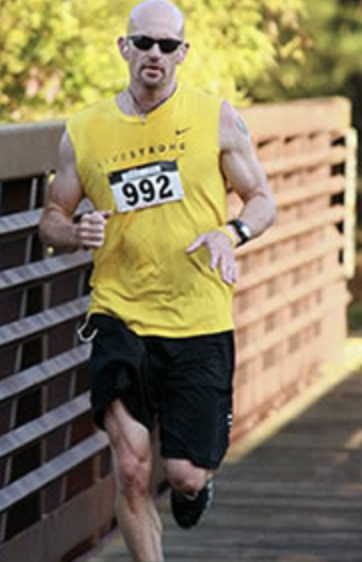
By 2010, he hung up his skates and pivoted to long-distance obstacle racing.
By 2011, he was running and training relentlessly.
By 2013, his back finally reached its breaking point.
“I knew something was really wrong. I needed answers.”
A trusted orthopedic surgeon sent him to neurosurgeon Dr. David Jones at Carolina NeuroSurgery & Spine Associates (CNSA) in Greensboro. From the first visit, Michael felt understood.
A Surgeon Who Believed in His Lifestyle
At that time, the focus was understanding the source of his spine pain and building a long-term plan. Discussions about returning to hockey would come later, after his 2018 PLIF surgery.
"David never told me to stop doing the things I loved. “Years later after my 2018 PLIF, I asked about returning to league hockey. Dr. Jones encouraged me to stick with controlled practice, known as stick and puck, rather than competitive league play."
Despite chronic pain, Michael stayed active. He kept training clients. He continued running until worsening hip deterioration forced him to limit his mileage around 2020.
But hockey never fully left his heart. In 2015, he stepped back onto the ice.
The Game that Changed Everything
In August 2017, one sudden stop during a game triggered a dramatic slip from his existing spondylolisthesis.
"The next morning I could barely walk. My pain was an eight or nine."
He reached out to Dr. Jones immediately. Together they tried conservative steps first, including a nerve ablation, before deciding surgery was necessary. By early 2018, his right quadriceps had shrunk nearly two inches from nerve compression and he could feel his spine shift when bending.

Surgery and the Turning Point
On July 5, 2018, Dr. Jones performed an L4-L5 PLIF fusion to stabilize the unstable vertebrae and decompress the nerves causing severe pain and weakness.
Michael asked Dr. Jones whether pain relief was realistic. Dr. Jones gave an honest and hopeful answer.
“If I was living with pain at a seven to nine before surgery, he told me to expect a one to three afterward. That is exactly what happened.”
The relief was immediate.
"I walked one mile that night. Three miles the next day. Five miles the third day. And I stopped taking Lyrica the next morning."
Although he had normal surgical pain during healing, the life-limiting pain was gone.
Team-Based Care That Goes Beyond One Injury
Years earlier, when a hockey collision injured his neck, Michael turned to Dr. Jones's colleague, pain management specialist Dr. Dave Eichman for help. With targeted nerve ablations at C3 and C4, Dr. Eichman helped Michael manage neck pain while staying active in the sports he loves.
"The practice understands the mindset of an athlete. They understand the mindset of someone who refuses to stop living. They meet you where you are and give you a path back."
Recovery Fueled by Discipline and Intention
Michael pushed himself carefully but with purpose.
He attempted running at weeks eight and thirteen, but his body was not ready. He kept walking, strength training, and moving with intention.
At around week thirty, everything changed. He ran again without pain.
One of the most meaningful milestones came from a personal tradition. Michael and Dr. Jones have trained together for years. Each year they complete "Michael’s birthday workout," a demanding circuit based on his age:
• Age multiplied by ten pushups
•
Age pullups
• Age miles run
• Age multiplied by one
hundred meters of rowing
• Age multiplied by ten seconds of
planks
• Age situps
The day before his fusion surgery on July 4, 2018, he completed the workout without knowing when he would be able to perform it again.
At nineteen weeks post-op, on November 23,
2018, he completed the entire workout again.
A symbolic victory
reclaimed.
A Hip Replacement and a New Era of Strength
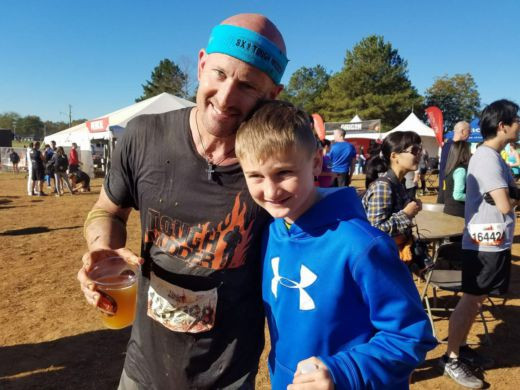
His hip, originally injured in 2005, continued to deteriorate from years of running. He stopped running altogether in 2022. On December 26, 2024, he underwent a total hip replacement.
He began running again at week thirteen post-op and now regularly exceeds five-mile runs.
This Thanksgiving, Michael and Dr. Jones completed his birthday workout together:
• 580 pushups
• 58 pullups
•
5.8-mile run
• 5800-meter row
• 580 seconds of
planks
• 58 situps
Seven years after his spinal fusion and eleven months after hip replacement, he continues to grow stronger.
The Pain That Never Stopped Him
Michael also lives with chronic neck pain from a hockey collision years ago. Pain management specialist Dr. Dave Eichman has helped him stay active with targeted injections and nerve ablations at C3 and C4.
“The practice understands the mindset of an athlete. They understand someone who refuses to stop living. They meet you where you are and show you a path forward.”
Although his fusion relieved the severe, life-limiting pain, Michael still experiences low back discomfort that stays around a 1–3 most days, mostly stiffness. He manages it with ibuprofen, Tylenol, stretching, functional mobility work, and yearly injections and ablations from Dr. Dave Eichman. This careful routine helps him maintain an active and demanding lifestyle.
The Personal Trainer Who Sends His Own Clients to CNSA
As a personal trainer and gym owner, Michael pays close attention to outcomes. The trust he built with Dr. Jones and Dr. Eichman shapes the way he guides others.
"I have probably sent eight clients to David over the years. Every single one needed surgery. Every single one had the best possible outcome."
Michael believes recovery is not only about the procedure. It is about the choices you make before and after.
• Eat a low inflammatory diet
•
Reduce or eliminate alcohol
• Exercise consistently
•
Strengthen your body before surgery
• Maintain a healthy
weight
• Keep moving and avoid fear-driven inactivity
“I refused to let my life shrink. Dr. Eichman helped me keep living the life I want.”
Care That Changes Lives in Greensboro
“CNSA has been incredible. Dr. Jones is amazing. His skill changed my life. But it is also how they treat you. I always felt heard. Their bedside manner is excellent. They care about outcomes and it shows.”
Today, Michael is back to running, lifting, and living with intention. Five days a week in the gym. Three days a week on the road. A full life reclaimed. He hopes to return to the ice once strength and mobility are fully restored, with a goal of attempting hockey again by late Q1 2026.
I came to Dr. Jones for stability. "I left with my pain dramatically reduced and fully manageable, allowing me to stay active without prescription medications."
This is the impact of exceptional spine care.
As the holidays approach, Michael's story reflects the hope and possibility that expert care can restore.
Call or Schedule an appointment online to take YOUR life back.


Leave a Comment